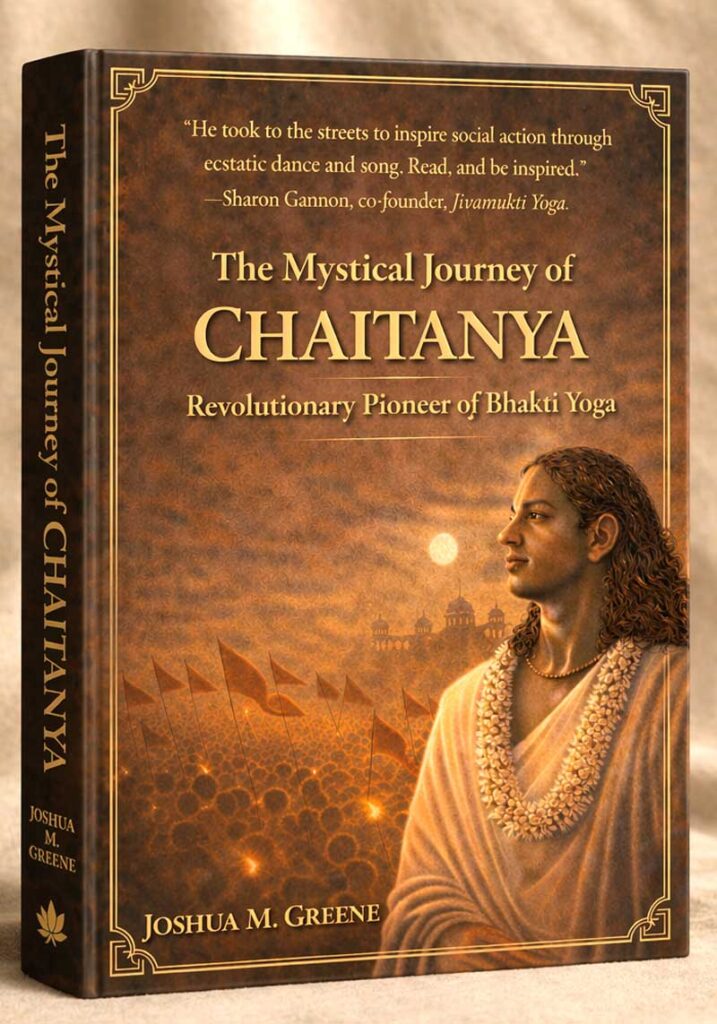
The Mystical Journey of CHAITANYA

The Mystical Journey of CHAITANYA – book cover

TO BE RELEASED IN FEBRUARY 2027

The Mystical Journey of

CHAITANYA

Revered, vilified, worshiped, condemned, forgotten, then resurrected onto a world stage, Chaitanya (1486-1533) is one of the most controversial figures in mystic history. One hundred years ago, Gandhi modeled his nonviolent protests on Chaitanya’s peaceful demonstrations. In the 1950s, Martin Luther King paid homage to both Gandhi and Chaitanya by emphasizing nonviolence and songs of protest in his civil rights movement. Starting in the 1960s, the Beatles popularized Chaitanya’s signature songs. Today, Chaitanya’s mantra meditation is a staple practice in yoga studios worldwide.

Millions know his songs and practices, yet hardly anyone knows him. Chaitanya is arguably the most unknown famous person in the world. 

In his time, he was one of India’s greatest spiritual leaders, a social reformer whose ecstasies of devotion and dedication to fighting racial oppression won him a following in the millions. He was also a husband, son, brother, scholar, poet and a lover of God whose movement continues to grow worldwide. 

Based on detailed research and rare documents, The Mystical Journey of Chaitanya presents his story with you-are-there immediacy—and epic tale of struggle, renewal, and the forces that determine history. Chaitanya’s teachings are as relevant, applicable, and urgent today as they were five hundred years ago.

How Martin Luther King Led Me to Sixteenth-Century Mystic Chaitanya

There are moments that shape an entire life. One occurred for me in 1966, when Dr. Martin Luther King Jr. came to speak at my high school, Fieldston, in the Bronx. I was sixteen, a reporter for The Fieldston News and was assigned to cover his talk. He walked onto the stage, calm and radiant, and spoke about conscience as the engine of change. He told us that the arc of the moral universe bends toward justice, we sang “We Shall Overcome,” and I scribbled notes, unaware that I was being guided toward a story that would take nearly sixty years to tell.
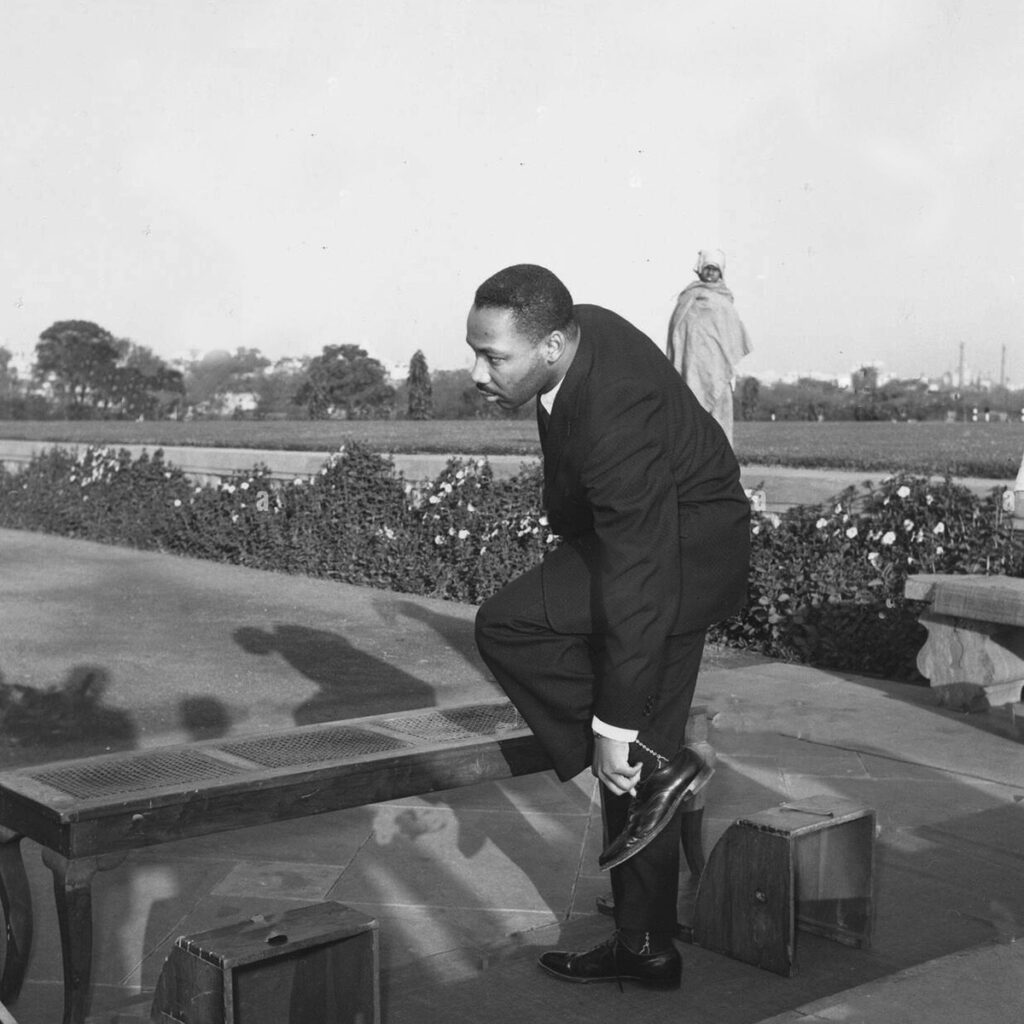
MLK in India
1959 – Dr. Martin Luther King, Jr. removes his shoes before entering Mahatma Gandhi's shrine.
Madison, 1967: Tracing a Pilgrimage

The following year I entered the University of Wisconsin–Madison and joined the staff of the Daily Cardinal. One of my first assignments: retrace Dr. King’s 1959 journey to India to learn about Gandhi’s nonviolent practices at their root. From the earliest days of the Montgomery bus boycott, King had described Gandhi as “the guiding light of our technique of nonviolent social change.” After the boycott’s success, he felt compelled to visit the land where that light had first been kindled.

Among other stops, King toured Bodh Gaya, the place of Buddha’s enlightenment. What I learned while researching that trip startled me. It seems Bodh Gaya had been the place where another pioneer of peace had achieved enlightenment five centuries earlier: Bengal saint Chaitanya, whose nonviolent protests against an oppressive government inspired Gandhi’s campaign.

The Hidden Lineage of Non-Violence

Chaitanya, a Vaishnava or worshiper of personal divinity, taught that all beings share the same spiritual essence, and that selfless, inclusive love is the ultimate peace formula. His public singing and dancing in the streets of sixteenth-century India defied rigid caste barriers and political opposition. Gandhi absorbed Chaitanya’s devotional impulse through his own Vaishnava upbringing and made ahimsa, the principle of non-harm, the essence of his freedom movement.

From Bodh Gaya, King traveled to Ahmedabad, where in 1930 Gandhi’s followers had chanted prayers made popular by Chaitanya. In his final broadcast from Delhi, King declared, “Since being in India, I am more convinced than ever before that the method of nonviolent resistance is the most potent weapon available to oppressed people in their struggle for justice and human dignity.”

This, then, was my unexpected discovery, that there was a lineage in the history of nonviolent protest from Chaitanya in 1500 AD to Gandhi in the 1930s to King in the 1960s. Yet the more I researched, the more it was clear that little had ever been written about Chaitanya for the general public.

Writing The Mystic Journey of Chaitanya

By the 1990s, my fascination with Chaitanya had grown into an obsession. Research led me through palm-leaf manuscripts, temple libraries, and Chaitanya’s songs and prayers still sung in Bengal’s villages. Each encounter felt like a dispatch from the same moral universe King described: one in which love and respect for the dignity of all beings are the foundation of peace and civilized human society. In the early 2000s, after a decade of preparation, I set out to portray Chaitanya as a living force whose mystical experiences mirrored King’s comments at Fieldston a half-century before.

The Mystic Journey of Chaitanya does not focus on King or Gandhi directly, but it walks in their footsteps. It explores how Chaitanya, who began his career as a young scholar from Bengal, came to see divinity alive in every creature, and how that vision gave rise to a movement that traveled by foot, by song, by sheer joy across centuries and continents.

The Question That Abides

When I think back to that high school speech in 1966, I realize the seeds of my biography of Chaitanya were planted the moment King’s voice filled the hall. Back then, he challenged us to consider: What kind of love changes the world without spilling blood? Searching for the answer unearthed an unexpected link from the civil rights marches of the American South to the nonviolent protests of Gandhi’s freedom fighters, and back through time to Chaitanya’s followers singing and dancing in the early 16th century. Here was a chain of visionaries extending back five hundred years, inspired by the same impulse to help build a more just world. Telling the life story of the earliest of those pioneers, Chaitanya, reminded me that history’s greatest revolutions often begin in the quiet moment when one heart recognizes itself in another.
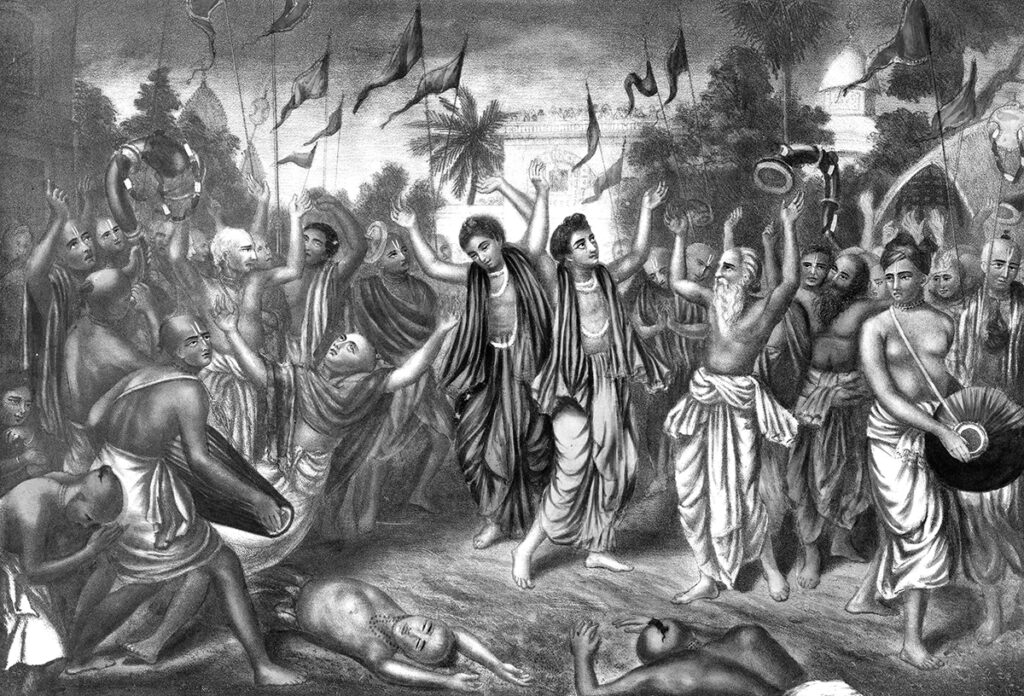
CHANTING 16TH CENTURY
1500 – Bengal, India. Chaitanya leads followers in performance.

How the Late Beatle George Harrison Turned Chaitanya’s Mantra Into a Hit Record

Ancient Origins

There are combinations of words that change history. The Hare Krishna mantra (sacred sound)—Hare Krishna, Hare Krishna, Krishna Krishna, Hare Hare / Hare Rama, Hare Rama, Rama Rama, Hare Hare—is one of them. The mantra has its roots in India’s ancient Sanskrit texts, and the chanting was never just a ritual; it was a practice meant to awaken the eternal self, sleeping within the material body.

Chaitanya’s Revolution

In the 16th century, saint Chaitanya brought the mantra out of seclusion and into the streets. He and his followers sang it in public, accompanied by drums and hand cymbals. His movement was a joyful uprising that grew from his conviction that public chanting could revive the capacity for love.

Colonial Suppression

A hundred years later, when European merchants and missionaries arrived in India, they saw things differently. To them, the chanting was a primitive ritual from India’s past. Public singing of the Krishna mantra was marginalized and on occasion outlawed. Still, the practice never died, and in Bengal especially, it remained the heartbeat of spiritual life, waiting for its moment of renewal.

The Mantra Returns

That renewal came in the 19th century, when lost biographies of Chaitanya were rediscovered and the true meaning of the mantra was brought to light. In 1965, a Chaitanya follower, Bhaktivedanta Swami Prabhupada (1896-1977) boarded a steamship headed for New York City with just a few dollars and the determination to share the mantra with the world. He opened a small storefront center, and within two years he attracted a number of admirers. Among them was a music producer, who recorded him singing the Krishna mantra with his students.

The Beatles and Beyond

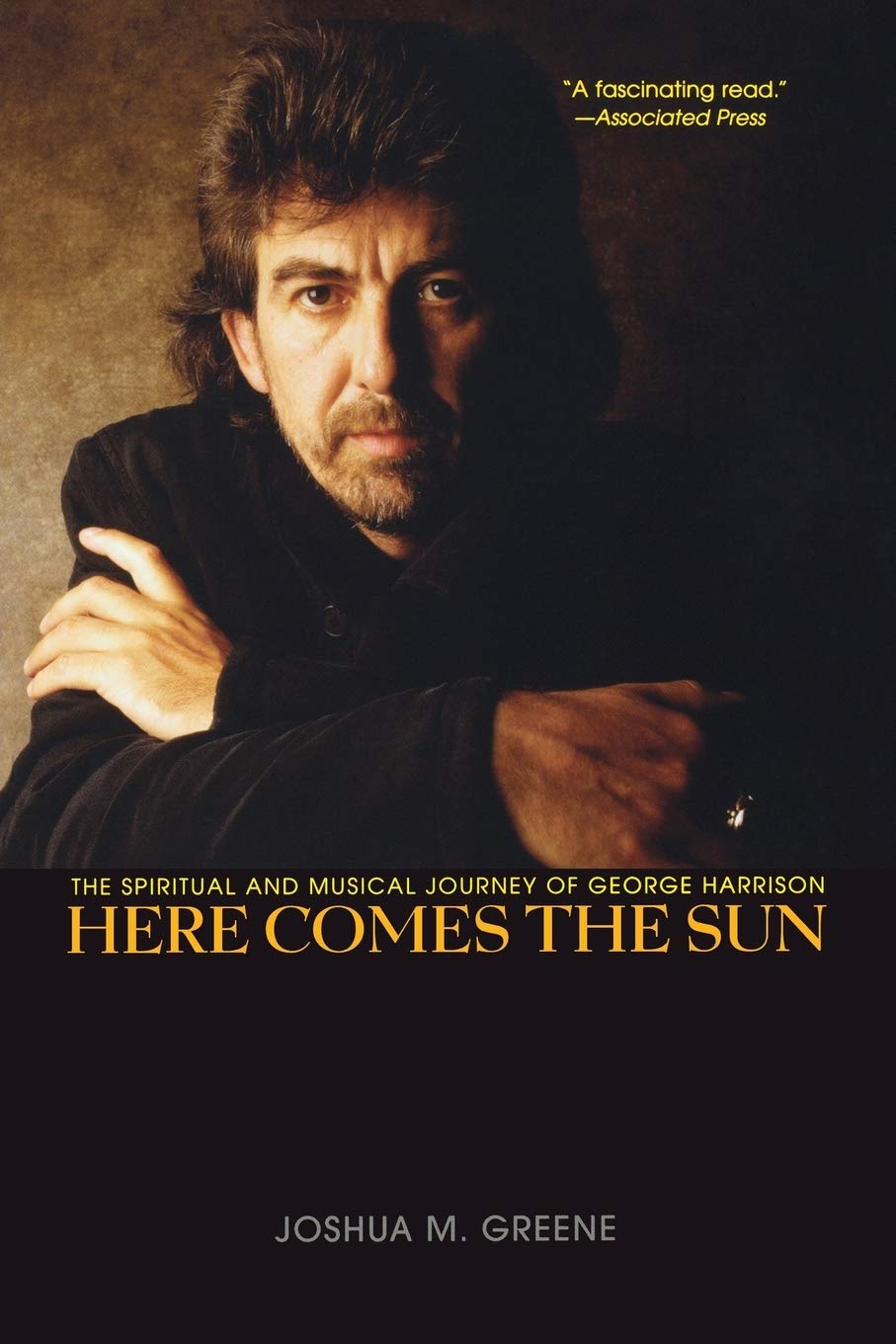
In 1966, during the Beatles tour of the U.S., when George Harrison first heard the mantra on U.S. radio, something clicked. “It sounded familiar,” he would later describe. In 1968, back in London, he met a few of Prabhupada’s students who had come to open a Krishna temple and were chanting on Oxford Street, in public performance following Chaitanya’s example.

Attracted by their sincerity and dedication to a life of devotion, George invited them to record the Hare Krishna mantra at Apple Studios. The recording was released in 1969 and to everyone’s surprise (not least the Apple Records accountants), it became a top ten hit, attracting listeners with its spiritual message broadcast on radios and televisions across Europe and America. For the first time in history, an ancient spiritual song had gone pop.

A Global Hit

From that point on, the mantra circled the globe. In the intervening half-century, the Krishna mantra has been sung at music festivals, chanted in yoga studios, and performed in most countries of the world. And here’s the surprise: the same mantra that uplifted villagers in Bengal five hundred years ago still brings smiles, still stirs hearts, still brings strangers together in song. At a time when the world often feels divided, when joy can feel scarce, with the help of George Harrison’s recording, the Hare Krishna mantra remains what it has been since the dawn of time: a reminder that beneath all differences, the human spirit longs for connection, music, and love.
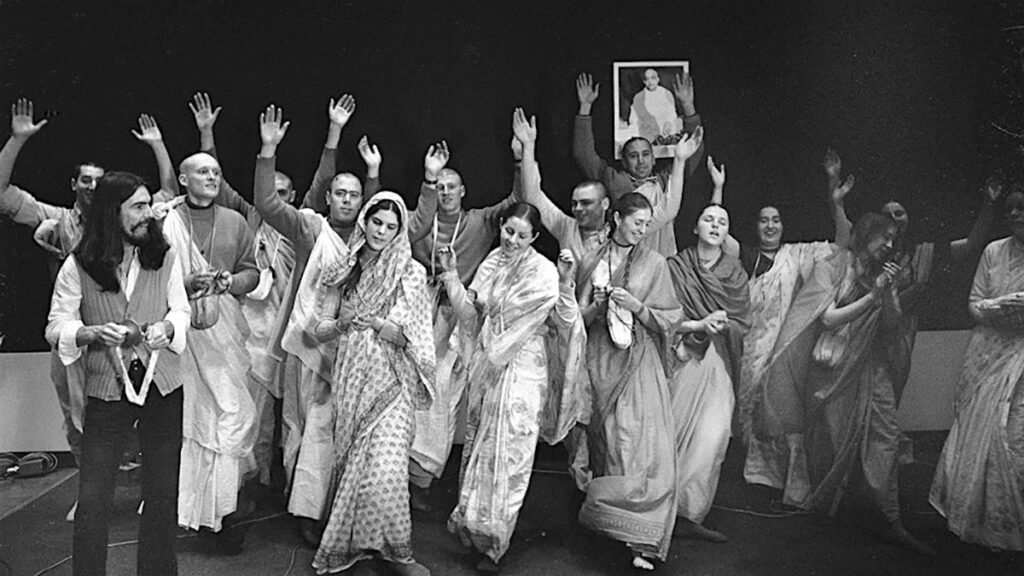
George Harrison - Kirtan
1970 – London. Krishna devotees record with George Harrison at Apple Studios.

Appreciations

The Mystic Journey of Chaitanya is the book that the world of spirituality has been waiting for. Joshua M. Greene has managed to liberate the story of medieval Indian mystic Chaitanya from the exclusive grip of hagiographers and academics, a story that for five hundred years has been inaccessible to modern audiences due to gaps in language, history, and culture. In this sensitive account, Greene effectively argues that Chaitanya—the avatar for Kali Yuga, the current age of crisis—was not just a spiritual revivalist, but an ecologist, humanitarian, and peacemaker who sought to lead humanity away from environmental destruction and back to the path of dharma—an urgent message, told here with literary appeal.”

Abeer Saha

Curator, National Museum of American History, Smithsonian Institution
5

“There are few books—let’s call them living books—that hold magic in their pages. The Mystic Journey of Chaitanya is one of them. You can almost hear Chaitanya’s ecstatic singing, smell the fragrance of the earth on which he walked, see the colors of the verdant forests, and feel the excitement of the masses who sang with him. As we read, we are touched by his timeless message that beyond lifeless materialism and empty religious dogma lies an eternal reality of which we are all a part. Joshua M. Greene has done an amazing job by drawing from various sources—traditional, modern, academic, folkloric—to create a fascinating picture of the Golden Avatar that enlivens and inspires with his timeless message.”

Sachinandana Swami, Gaudiya Vaishnava guru

author, Bhagavad Gita (German translation and commentary)
5

“In this splendid study, Greene envisions history as much as narrates it, employing a historical imagination that most historians would fail to achieve. In Greene’s work Chaitanya emerges life-like, in all his dramatic possibilities, immanent more than distant—a creative and persuasive blending of fact and faith and a treat for scholar and devotee alike.”

Amiya P. Sen

historian and author
4

“Over the past five hundred years, there have been many hagiographies of Chaitanya, and in the past century, there have also been scholarly studies of Chaitanya’s extraordinary life and teachings. The Mystic Journey of Chaitanya stands in a class of its own. This book combines the power of traditional narrative with the insights of historical scholarship to give us something unlike any previous rendition of Chaitanya’s life. Joshua M. Greene brings to life sixteenth-century India, gives us a front-row seat to the gripping events that unfolded in Chaitanya’s presence and draws us in the minds and hearts of his contemporaries. Greene does all this while never losing sight of what Chaitanya’s story means for us in the twenty-first century. This is a book that stays with you long after you have read it.”

Dr. Ravi M. Gupta

Charles Redd Chair of Religious Studies, Utah State University
5

“Greene retells the original Chaitanya narrative for readers unfamiliar with this period in history. Staying true to the story and respectful of the tradition from which it arises, he manages to convey the life of the Golden Avatar in a way that nonbelievers will appreciate. If you are someone seeking entrance into one of the most enduring tales that mystic India has to offer, this is the book for you.”

Steven J. Rosen

Author, "Chaitanyology"
founding editor, Journal of Vaishnava Studies
5

“In this absorbing biography of Lord Sri Chaitanya, readers gain insight into the transformative moment when the joyful singing of Krishna’s names began its journey around the world. For more than 500 years, followers have devoted themselves to perpetuating memory of that historic time as experienced by our ancestor, Lord Sri Nityananda Prabhu. No respectable account of Sri Chaitanya can be written without his blessings, and this moving biography has them. It is a magical account and a fitting introduction to one of the greatest spiritual dignitaries the world has ever known.”

Prabhupad Nitya Gopal Goswami, Acharya

14th generation descendent of Lord Sri Nityananda Prabhu
5

“Those of us who have dedicated our lives to preserving and perpetuating sacred sound know Chaitanya as the pioneer of kirtan culture. He was also a child prodigy, a renowned educator, a son, a husband, and later in life a lover of the Divine whose ecstasies are unmatched in mystic writings. Joshua M. Greene has written a beautiful, poignant, warmly personal biography. I loved every page.”

Jai Uttal

Grammy-Nominated kirtan vocalist
5

“Great teachers such as Chaitanya shine like the sun on everyone. He taught that chanting the holy names was the most effective way to create a sacred, loving space between one and all. We are in deep need of that space today, in need of knowing we are capable of loving and worthy of being loved. This biography achieves something wonderful: it brings readers inside the experience of being with him, inside that sacred space where they can feel their hearts open in the sunlight of true love.”

Krishna Das

Grammy-nominated new age vocalist
5

“To read about the lives of the avatars and saints is to have satsang, association, of enlightened minds. Author Joshua M. Greene offers us this rare opportunity in The Mystic Journey of Chaitanya, the sixteenth century spiritual activist and revolutionary who took to the streets to foster social action through ecstatic dance and soulful singing. This moving account of his life inspires us to also become living instruments of reform in the world. This book nourishes the soul and awakens your deepest, inner-most desires. Read, and be inspired.”

Sharon Gannon

co-founder, Jivamukti Yoga
5

“Joshua M. Greene presents us with an easy-to-read devotional literary narrative recounting the life of Chaitanya, the sixteenth-century saint, who founded the Gaudiya Vaishnavism movement. Greene’s biography is accessible, using his storytelling skills to capture with deep feeling the movement’s ideal of chanting the holy name to awaken the self.”

Alan Brill

Cooperman/Ross Chair of Jewish-Christian studies, Seton Hall University
author, "Rabbi on the Ganges: A Jewish-Hindu Encounter"
5

“Chaitanya comes to life in this remarkable narrative: his spiritual realization, his teachings, his relations with family and devotees, and his mission to spread sankirtan far and wide. His story unfolds with vivid reality as he and his companions move through the setting of sixteenth-century India. Its people of city and country, its great temples and devotional life, and its thrilling natural beauty are all portrayed in dense, glowing detail. Subsequent history and the author’s own reflections add welcome enhancements. Compelling, richly rewarding and illumining!”


Kusumita P. Pedersen

Professor Emerita of Religious Studies, St. Francis College
5
Fighter In The Woods by Joshua M. Greene

Fighter In The Woods

Fighter In The Woods

The True story of a jewish girl
 who joined the partisans in world war II

On a warm night in August 1943, while the rest of Poland slept, a teenager named Celia Cimmer climbed onto a stocky horse with a long shaggy mane. She cinched the strap of her rifle across her chest and tightened her grip on the horse’s reins, preparing for a tough ride.

Celia was part of a team of twenty-eight young men and one other teenage girl, all riding their own horses. These young people had escaped from the Nazis and become partisans, a secret group that fought back from hiding places in woods and dense forests. In a schoolyard several miles to the east, Nazi soldiers had stored a pile of ammunition. The partisans’ mission tonight was to destroy it.

Celia and her comrades quietly walked their horses through stands of trees and thick underbrush. When the schoolyard was in sight, they brought their horses to a stop. In the middle of the schoolyard, silhouetted against the starlit sky, were boxes of dynamite, barrels of gunpowder, cans of gasoline, belts of bullets, and other weapons stacked up in a tall pile. At the far end of the yard stood an abandoned schoolhouse. Celia could hear German voices coming from inside—men talking and laughing.

The partisans didn’t have much time to do their job. Silently, the team crept into the concrete yard and pulled their horses up in front of the pile of weapons. Celia and the other teenage girl stood guard with their rifles pointed toward the schoolhouse. Several of the young men jumped off their horses, lit gasoline-soaked rags, and threw them onto the pile of weapons. The men jumped back on their horses and rode out of the yard at a gallop. Celia and the other girl followed close behind.  

Seconds later, the pile of ammunition exploded with a deafening Boom! It was a roaring, ear-splitting explosion, as though a bolt of lightning had hit the schoolyard. The air stung with the smell of burning gasoline, and bullets popped in the stockpile like strings of firecrackers. Celia’s horse was nearest to the explosion, and he flinched at the sound. The horse reared up on his hind legs, Celia’s rifle got tangled in the reins, and she fell to the ground. Her horse galloped off. Celia turned to see Nazi soldiers running out of the schoolhouse, yelling at the partisans and firing their weapons. Two of the soldiers lit flares and tossed them forward. The schoolyard burst into light. Celia was lying on the ground, exposed and alone. No rifle. No horse.

The soldiers took aim.

NAMED A WINNER OF THE 2026

The Notable Social Studies Trade Book Awards are an annual project of the National Council for the Social Studies (NCSS) and the Children’s Book Council (CBC) running since 1972. This award list features K-12 annotated titles published in the previous calendar year that are exceptional books for use in social studies classrooms, selected by social studies educators. The book review committee, appointed by the NCSS, selects books that emphasize human relations, represent a diversity of groups and are sensitive to a broad range of cultural experiences, present an original theme or a fresh slant on a traditional topic, are easily readable and of high literary quality, and have a pleasing format and, when appropriate, illustrations that enrich the text. 

UNANIMOUS RECOMMENDATION

 2026 Texas Topaz Nonfiction Reading List for Grades 6-9

This state list is under the umbrella of the “Lone Star Reading list.”  The Lone Star Reading List is developed by public and school librarians from the Texas Library Association’s Young Adult Round Table. The purpose of the list is to encourage students in grades 6, 7, or 8 to explore a variety of current books.
Learn more about the list here.

WATCH

THE TRAILER

The true story of a Jewish girl who joined the partisans in World War II.

BOOK

STUDY GUIDE

Reading Group Questions
and Author Q&A

Download Here


The Girl Who Fought Back – The Vladka Meed Story

The Girl Who Fought Back

VLADKA MEED AND THE WARSAW GHETTO UPRISING

The Warsaw Ghetto Uprising is one of history’s most powerful acts of resistance. Here, author Joshua M. Greene (Signs of Survival) tells the true story of a young Jewish woman who was instrumental in the uprising as a smuggler of messages and weapons into and out of the Warsaw Ghetto.

Warsaw, Poland, 1940s: The Nazis are on the march, determined to wipe out the Jewish people of Europe. Teenage Vladka and her family are among the thousands of Jews forced to relocate behind the walls of the Warsaw Ghetto, a cramped, oppressive space full of starvation, suffering, and death.

When Vladka’s family is deported to concentration camps, Vladka joins up with other young people in the ghetto who are part of the Jewish underground: a group determined to fight back against the Nazis, no matter the cost.

Vladka’s role in the underground? To pass as a non-Jew, sneaking out of the ghetto to blend into Polish society while smuggling secret messages and weapons back over the ghetto wall. Every move she makes comes with the risk of being arrested or killed. But Vladka and her friends know that their missions are worth the danger—they are preparing for an uprising like no other, one that will challenge the Nazi war machine.

This astonishing true story of the Warsaw Ghetto Uprising, told through the lens of Holocaust survivor and educator Vladka Meed, introduces readers to a crucial piece of history while highlighting the persistence of bravery in the face of hate.

Access the Teacher’s Guide here

AWARDS

  • 2025 Notable Social Studies Book Award  (National Council for Social Studies and the Children’s Book Council)
  • 2025 Nonfiction Readers Award (Missouri Association of School Librarians)
  • 2025 Quick Pick List  (Young Adult Library Services Association)
  • A 2024 Junior Library Guild Selection
  • #1 on Amazon Children’s Historical Biography (hardcover)
  • #3 on Amazon Children’s Historical Biography (kindle)

WATCH

THE TRAILER

Teenager Vladka Meed and her friends inside the Warsaw Ghetto fight back against the Nazi war machine—a handful of young people against the world’s mightiest army.

WHO IS

VLADKA MEED?

Watch this short History Minutes segment on Vladka.

Appreciations

"Ideal for classroom study of the Holocaust and for history lovers. Recommended.
In this latest entry in the narrative nonfiction series, readers learn about Vladka Meed, a teenage girl who completed hundreds of daring missions for the Resistance in World War II Warsaw. Born Feige Peltel to a Jewish family, her light brown hair and gray-green eyes masked her true identity. Her appearance allowed her to take risks others could not, securing a job, money, and food for her family forcibly relocated to Warsaw’s Jewish ghetto. Her father died from illness and her mother, sister, and brother were deported to death camps. Deciding to use her appearance as a way to fight back, she joined ZOB, the Jewish Resistance, and was given the code name Vladka. She was able to blend in with the Christian Polish population, carrying out missions outside ghetto walls to secure weapons, money, and refuge for Jewish women and children. Interspersed with accounts of her increasingly dangerous exploits are short, fact-dense chapters adding context through historical details and period photographs. Greene’s direct, engaging style will keep readers turning pages and emotionally invested in Meed’s role in shaping history through the 1980s, when she and her husband established the Registry of Jewish Holocaust Survivors, a worldwide database with information on more than 200,000 individuals. Back matter is limited to a glossary and acknowledgments listing the author’s sources, including Meed’s memoir, published in English in 1993."

Marybeth Kozikowski

5

The Girl Who Fought Back – The Vladka Meed Story

The Girl Who Fought Back

Vladka Meed and the Warsaw Ghetto Uprising

A 2024 Junior Library Guild Selection
#1 on Amazon Children’s Historical Biography (hardcover)
#3 on Amazon Children’s Historical Biography (kindle)

The Warsaw Ghetto Uprising is one of history’s most powerful acts of resistance. Here, author Joshua M. Greene (Signs of Survival) tells the true story of a young Jewish woman who was instrumental in the uprising as a smuggler of messages and weapons into and out of the Warsaw Ghetto.

Warsaw, Poland, 1940s: The Nazis are on the march, determined to wipe out the Jewish people of Europe. Teenage Vladka and her family are among the thousands of Jews forced to relocate behind the walls of the Warsaw Ghetto, a cramped, oppressive space full of starvation, suffering, and death.

When Vladka’s family is deported to concentration camps, Vladka joins up with other young people in the ghetto who are part of the Jewish underground: a group determined to fight back against the Nazis, no matter the cost.

Vladka’s role in the underground? To pass as a non-Jew, sneaking out of the ghetto to blend into Polish society while smuggling secret messages and weapons back over the ghetto wall. Every move she makes comes with the risk of being arrested or killed. But Vladka and her friends know that their missions are worth the danger—they are preparing for an uprising like no other, one that will challenge the Nazi war machine.

This astonishing true story of the Warsaw Ghetto Uprising, told through the lens of Holocaust survivor and educator Vladka Meed, introduces readers to a crucial piece of history while highlighting the persistence of bravery in the face of hate.


Access the Teacher’s Guide here

WHO IS

VLADKA MEED?

Watch this short History Minutes segment on Vladka.

Appreciations

"Ideal for classroom study of the Holocaust and for history lovers. Recommended.
In this latest entry in the narrative nonfiction series, readers learn about Vladka Meed, a teenage girl who completed hundreds of daring missions for the Resistance in World War II Warsaw. Born Feige Peltel to a Jewish family, her light brown hair and gray-green eyes masked her true identity. Her appearance allowed her to take risks others could not, securing a job, money, and food for her family forcibly relocated to Warsaw’s Jewish ghetto. Her father died from illness and her mother, sister, and brother were deported to death camps. Deciding to use her appearance as a way to fight back, she joined ZOB, the Jewish Resistance, and was given the code name Vladka. She was able to blend in with the Christian Polish population, carrying out missions outside ghetto walls to secure weapons, money, and refuge for Jewish women and children. Interspersed with accounts of her increasingly dangerous exploits are short, fact-dense chapters adding context through historical details and period photographs. Greene’s direct, engaging style will keep readers turning pages and emotionally invested in Meed’s role in shaping history through the 1980s, when she and her husband established the Registry of Jewish Holocaust Survivors, a worldwide database with information on more than 200,000 individuals. Back matter is limited to a glossary and acknowledgments listing the author’s sources, including Meed’s memoir, published in English in 1993."

Marybeth Kozikowski

School Library Journal Review
5

Signs of Survival

Signs of Survival: A Memoir of Two Sisters in the Holocaust

A Memoir by renee hartman with Joshua M. Greene

SIGNS OF SURVIVAL PICKED UP FOR LIMITED TV SERIES BY AMBLIN ENTERTAINMENT AND ACADEMY AWARD-WINNING ACTRESS, MARLEE MATLIN

Read the Announcement

Two sisters: one deaf, one hearing. This is their true story.

I was ten years old then, and my sister was eight. The responsibility was on me to warn everyone when the soldiers were coming because my sister and both my parents were deaf.

Meet Renee and Herta, two sisters who faced the unimaginable — together. This is their true story.

As Jews living in 1940s Czechoslovakia, Renee, Herta, and their parents were in immediate danger when the Holocaust came to their door. As the only hearing person in her family, Renee had to alert her parents and sister whenever the sound of Nazi boots approached their home so they could hide.

But soon their parents were tragically taken away, and the two sisters went on the run, desperate to find a safe place to hide. Eventually they, too, would be captured and taken to the concentration camp Bergen-Belsen. Communicating in sign language and relying on each other for strength in the midst of illness, death, and starvation, Renee and Herta would have to fight to survive the darkest of times.

This gripping memoir, told in a vivid “oral history” format, is a testament to the power of sisterhood and love, and now more than ever a reminder of how important it is to honor the past, and keep telling our own stories.

WATCH

THE TRAILER

As the only hearing person in her family, Renee must guide her deaf parents and sister through the horrors of a Nazi invasion. Based on a true story.

INTERVIEW

Join Joshua for a 40-minuteo interview at the Los Angeles Holocaust Museum on “Signs of Survival,” recorded Sunday December 15, 2024.

In the Media

Articles & Interviews

“In 1944, ten-year-old Renee Hartman’s her fam­i­ly and com­mu­ni­ty are round­ed up and sent to Auschwitz; her one remain­ing rel­a­tive is her deaf younger sis­ter, Her­ta. This con­nec­tion becomes more pre­cious, her last link to nor­mal­i­ty and family.” Read the article.

Talk Radio Europe

Appreciations

"This is a compelling story, exploring the role that senses play when one is in danger as well as presenting the candid recollections of everyday details of two children navigating appalling conditions during wartime. An extraordinary tale of sisterhood and survival."

Kirkus

5

"Signs of Survival is a compelling story... should be required reading."

This Bliss Life

4

"Mem­oirs such as Renee’s under­score, as no oth­er doc­u­men­ta­tion can, the indi­vid­ual human expe­ri­ence of the Holo­caust. Sto­ries of the Holo­caust show the human spir­it and also the fail­ure of that spir­it; these nar­ra­tives show acts of hero­ism and also the unheroic acts Jew and oth­er vic­tims of the Nazis had to do just to stay alive."

Jewish Book Council

5

Chapter Excerpt

The Sound of Boots

RENEE: In 1943, German soldiers rounded up the Jews living in my city, Bratislava, and sent them to death camps to be killed. There would be eight to twelve soldiers marching together from house to house, knocking on doors, and yelling, “Get ready to leave! You have one hour!” I remember the stomping of their boots on the cobblestoned streets.

My parents, younger sister, and I lived in a fourth-floor apartment, and when I heard the sound of those boots, I ran to warn my family. Then we rushed into a room at the back of the apartment and hid. When the soldiers knocked on our door, we didn’t answer and stayed as quiet as possible.

I was ten years old then, and my sister was seven and a half. The responsibility was on me to warn everyone when the soldiers were coming because my sister and both my parents were deaf.

I was my family’s ears.

Dressmaker's Daughter jacket cover

The Dressmaker’s Daughter

The Dressmaker’s Daughter: A True Story of the Holocuast

A memoir by Edith “Ditta” Lowy

“One dark morning at 4 a.m. armed guards stormed into our cold, wooden barrack, pointed their rifles at us, and yelled, ‘You and you! Out!’… Two days later we arrived at another concentration camp: Stutthof. Soon after our arrival, guards pushed me and my mother onto a truck with four other women and told us we were being sent to work on a farm. The truck arrived at the farm—and my mother’s skill as a dressmaker saved our lives.…”

The Nazis have ordered Ditta and her mother to work as slave laborers. Can they find a way to survive together?

AVAILABLE THROUGH THE SCHOLASTIC BOOK CLUB

Appreciations

"Vitally important, very well-told.
This is a very easy story for a child to relate to. It details the pre-teen and teenage years of a girl caught up in the Europe of World War II and the Holocaust. It is not graphic, but conveys effectively what a young person feels when their life is not in their own control. It shows the importance of family, teamwork, resilience and hope. Ditta shows that despite all odds, she can survive the worst and build a new full life. An uplifting read."

Chrism1267

Scholastic review
5

What's Inside

Denson’s First Visit to Dachau

Denson drove to JAG rear headquarters in Munich—known affectionately as “Lucky Rear”—where the Dachau trials were being prepared. He arrived at the Munich inn that would be his new home, unpacked quickly, and set out in his jeep for Dachau. Munich had been heavily bombed in the final weeks of war, and roads were strewn with rubble from toppled buildings. He drove out of the ruined city and into fields and hills in the bloom of summer. Six miles west he crossed a stone bridge, traversed a long road flanked by poplars and a row of look-alike houses, and drove through the gates of the camp.

The bodies were gone, but everything else was as it had been at liberation. The crematorium chimney rose from its brick foundations near the Schiesstand, or execution wall. The ground beneath the wall was still stained rust red, and the smell of blood was still strong. He walked around the periphery of mass graves, beneath the limbs of hanging trees, across the roll call yard. A large area inside the camp was enclosed with barbed wire. Inside the holding cage were barracks. German prisoners moved in and out of the buildings. Some of them watched him as he made his way around the camp.

He entered the Records Room, a twenty-by-thirty-foot office. Wooden shelves and metal cabinets lined the walls. He took folders from a shelf and read reports of men, women, and children crowded together like cattle, suffocating in sealed boxcars. He read of typhus epidemics that went unchecked, killing more than three thousand inmates per month. He read statements by liberation soldiers who had discovered emaciated prisoners lying on bunks saturated with blood and excrement. He read interviews with victims who spoke of medical tortures, beatings, grossly inadequate food, scant clothing in subzero winters, nonexistent sanitation, and numbers of people killed, numbers so large they made him dizzy.

Denson exited the Records Room, lit a Lucky Strike, and wondered what in heaven’s name he had walked into. Years later he confessed to simply not believing what the evidence told him. Lynching and torture had always been exceptions to human behavior, not the rule; and Germany was the home of classical music and philosophy, not the barbarism these reports described. He did not believe because his religious training rejected the notion of absolute evil, yet biblical descriptions of the Apocalypse did not come close to the nightmares of Nazi camps. He did not believe because Harvard Law School had taught him to distrust circumstantial evidence, illogical reports, and anything his innate intelligence found suspicious. Like most Americans, he had read a few articles and knew prisoners had been killed in the camps. But mass murder on this scale was unfathomable. Denson did not believe because believing would mean that the world was not the neat and tidy place he’d always thought it to be. A man is born, be it in Birmingham, Alabama, or Warsaw, Poland. He grows up, studies hard, works sincerely, serves God, leads a good life, and is entitled to expect that such sacrifice and decent behavior will bear fruit. But from these reports, leading a virtuous life had proved useless against Nazi terror. Even worse, virtue proved to be a deficit in the camps. Gestures of kindness were rewarded with floggings and death. Goodness and mercy were luxuries from a privileged world: they had no place in Dachau. When Germany’s first concentration camp opened its gates, a crack had appeared in the structure of things, and now the army was saying he was responsible for sealing the fissure.

He did not believe because believing would mean giving up the provincial, mannerly approach to law that had been his style until now and turning ruthless in pursuit of convictions. Bill Denson had never been a ruthless man.

Read more

In the Media

Articles & Interviews

NPR - Remembering the Horrors of Dachau

Joshua M. Greene appears on NPR during the 75th anniversary of the liberation of Camp Dachau.

WOCA - The Source Radio

Joshua M Greene Interview - Justice At Dachau

faqs

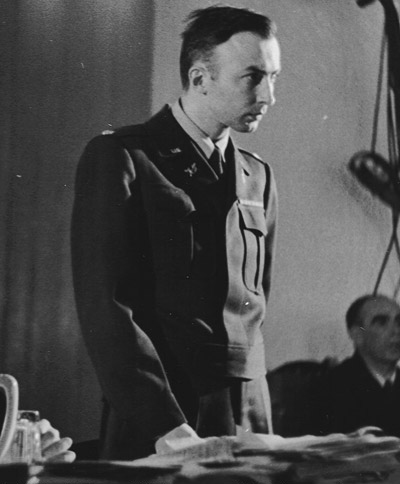
After three years, 15,000 pages of trial transcripts and dozens of interviews with witnesses to events of the period, Joshua M. Greene wrote this riveting account of the Dachau trials—the largest yet least-known series of Nazi trials in history. The story of those three years of proceedings and their chief prosecutor William Denson came to Greene’s attention in 1998, shortly after Mr. Denson’s death on Long Island. In their first meeting, Denson’s widow, Huschi, showed him an astonishing cache of materials in her basement: the results of fifty years of research by her late husband. That extraordinary archive formed the basis of Greene’s current book, which has also be published in a paperback edition by the American Bar Association.

Frequently Asked Questions

Writing another book on the Holocaust period was the farthest thing from my mind. But when Huschi Denson took me into the basement of her home and switched on the light, it was like discovering Aladdin’s cave. Her late husband had dedicated half a century of effort compiling every document, transcript, photograph and personal letter he could find to bring these trials to the world’s attention. When Huschi asked for my help, it felt like a calling more than just a writing assignment.

Until now, Nuremberg has been the Nazi trial known to most of the world. But the handful of Nazi chieftains convicted at Nuremberg never lifted a gun. The henchmen who conducted the torture, starvation, brutal medical experiments, and mass slaughter were tried at Dachau 65 miles south of Nuremberg. Few people have ever heard of the Dachau trials, yet they were vastly larger in scale and established important precedents in war crimes law, particularly with regard to chain of command: how far down the line can people be held accountable?

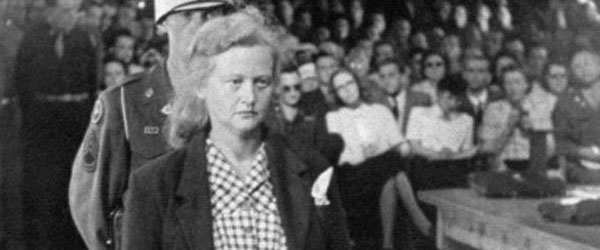
For one, the accused on trial at Dachau were monstrously cruel characters. Ilse Koch, the infamous “Bitch of Buchenwald,” had prisoners beaten to death so she could collect their tattooed skin. Dr. Klaus Schilling, who was recipient of two Rockefeller Foundation grants for medical research, murdered hundreds of prisoners in his inhumane search for a cure for malaria. Edwin Katzen-Ellenbogen was an American psychologist who set himself up as a privileged prisoner in Buchenwald and killed other prisoners who refused to pay him ransom. Unbelievable. Even more compelling is Denson himself, a man who risked his life to conduct fair trials, even after the Army told him to stop. That was a dangerous but exemplary commitment to due process.

Front-page relevance. We’re still confronting issues that challenged Bill Denson at Dachau. How are we to prosecute mass atrocities? Who is entitled to due process of law? What rules govern the pursuit of justice? How much or how little can we expect of international war crimes tribunals? Is the United States right or wrong for consistently refusing to become a signatory to the International Criminal Court? There is relevance on a more personal level as well. Bill Denson approached his work as though it were a spiritual mission. Here he was, a country lawyer, a deeply religious man of God, with no clue what he was getting himself into, determined to prove that the law is capable of addressing even unprecedented crimes. Especially today, at a time when integrity in leadership is in short supply, Colonel Denson provides a wonderful role model.

Denson’s counterpart on the Dachau defense team, Douglas Bates, was a man much like Denson: a God-fearing, patriotic son of the South who was appointed to defend the Nazis. When those two giants of law confronted one another during their closing arguments in the first Dachau trial, echoes of Daniel Webster, Abe Lincoln, Winston Churchill rang through my head—each man speaking out passionately from the depth of his conviction about important truths. Scenes like that can’t be invented.

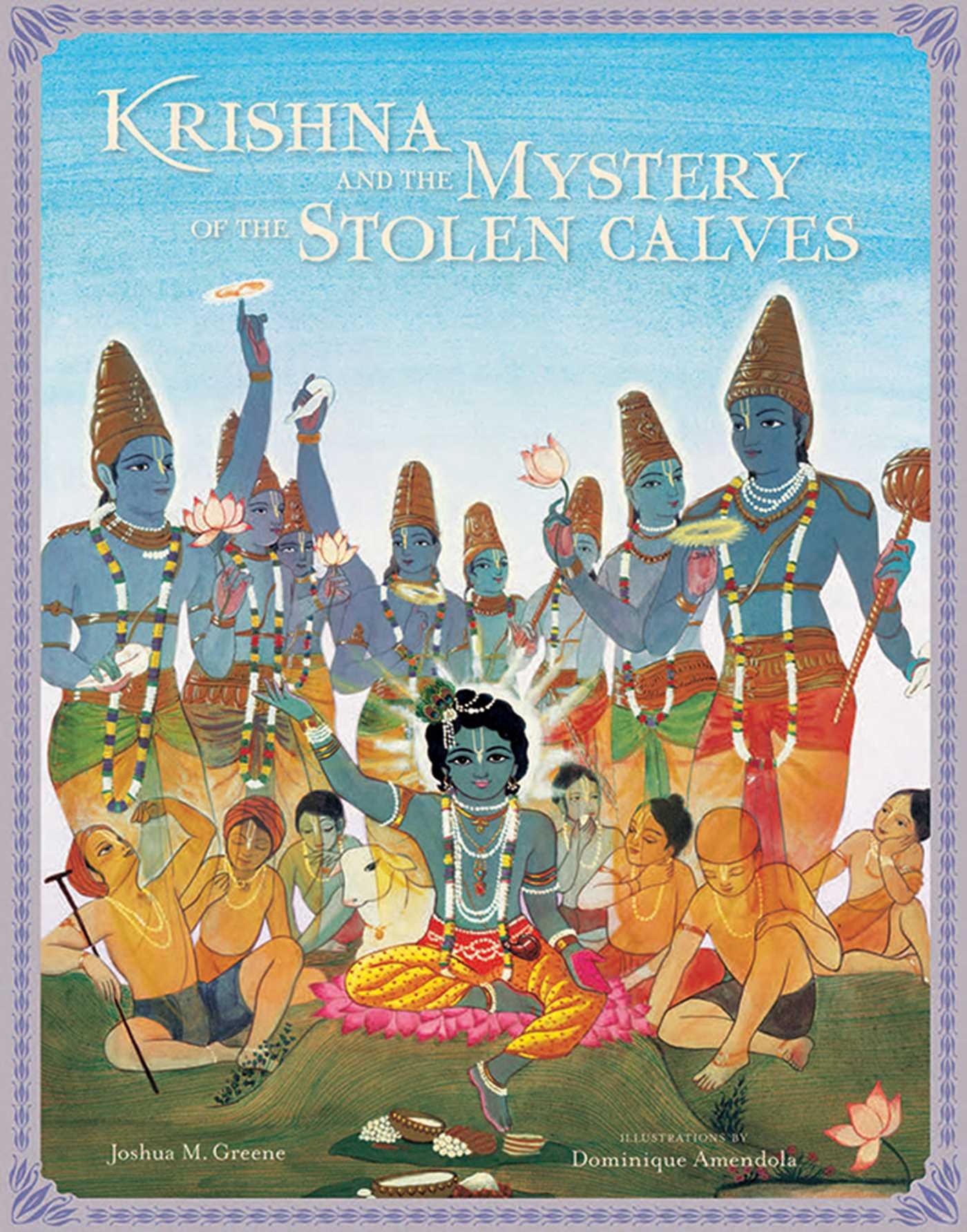
Krishna and the Mystery of the Stolen Calves

Krishna and the Mystery

of the stolen calves

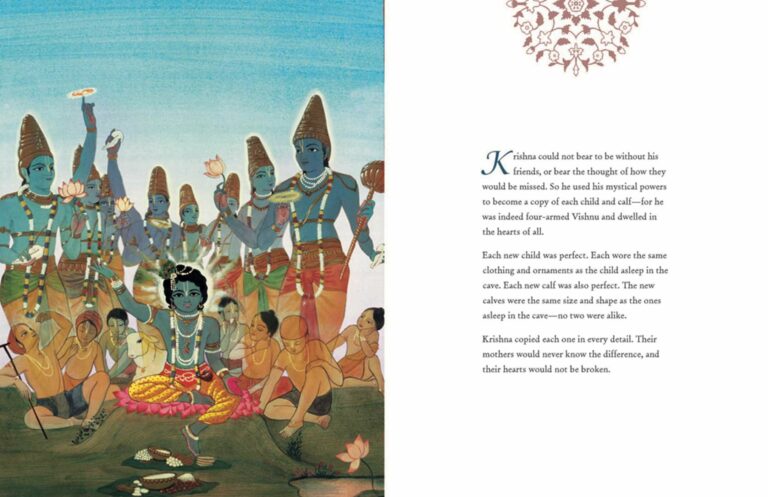
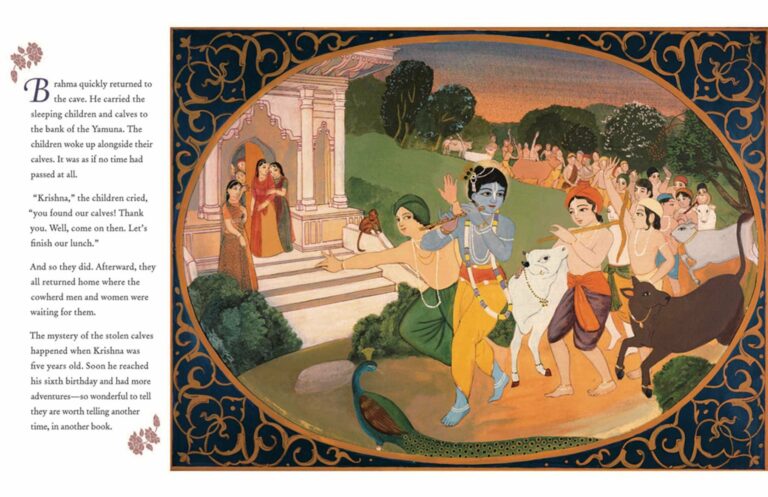
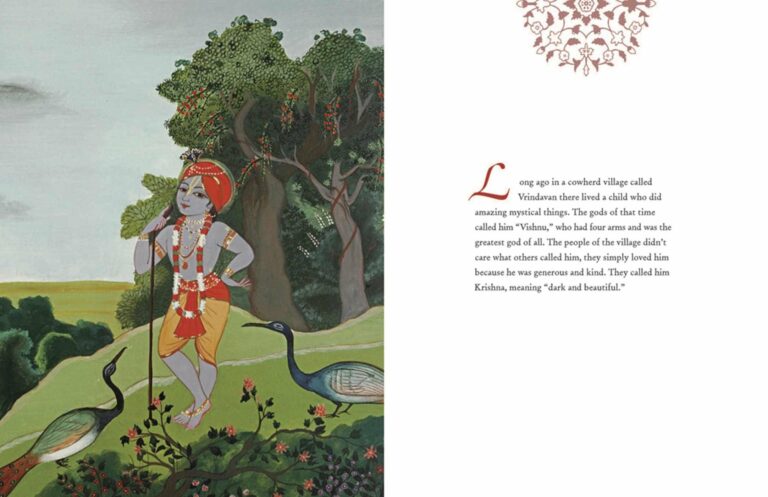
When powerful god Brahma tries to outsmart the village children of Vrindavan, he learns a lesson he won’t soon forget: there is magic in friendship. From the ancient texts of India called the Puranas comes this universal tale of childhood bonds. The Puranas contain hundreds of stories, many dedicated to Krishna, honored by Hindus worldwide as divinity in personal form. Whether one views Krishna as a transcendent figure or a magical cowherd boy, his stories captivate young readers. His love of nature and his dedication to family and friends have made him a hero for all ages.

Gallery

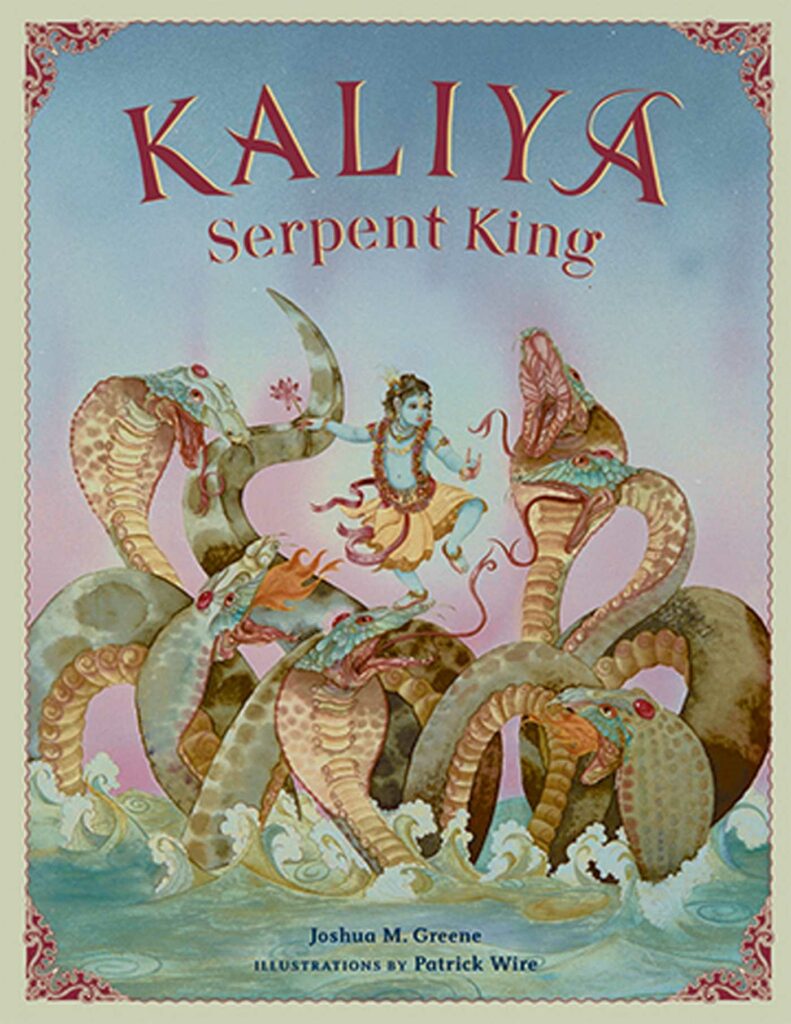
Kaliya: Serpent King

Kaliya

Serpent King

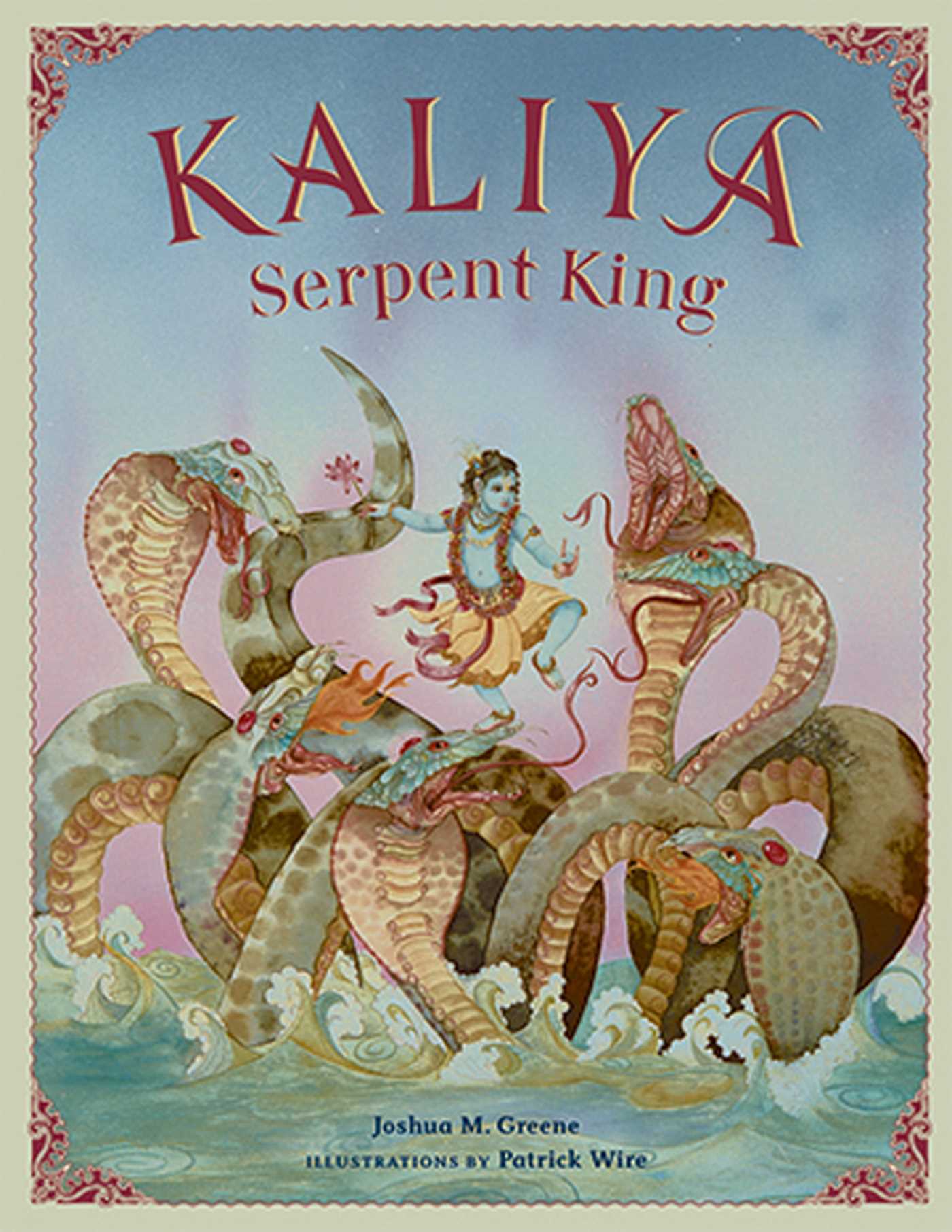
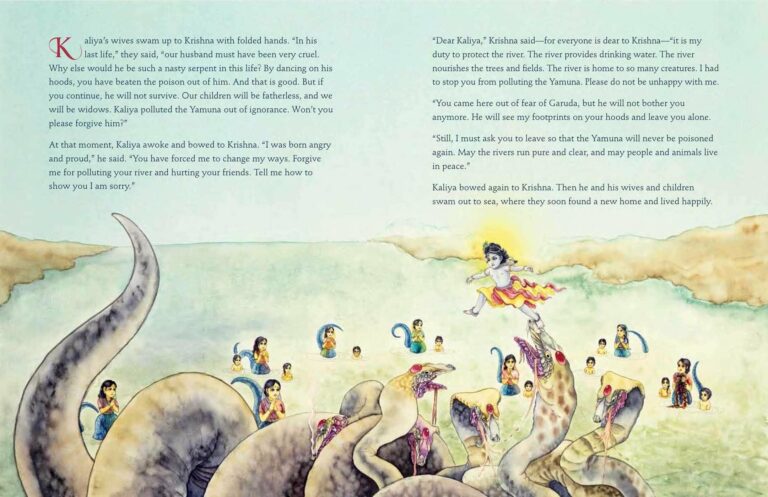
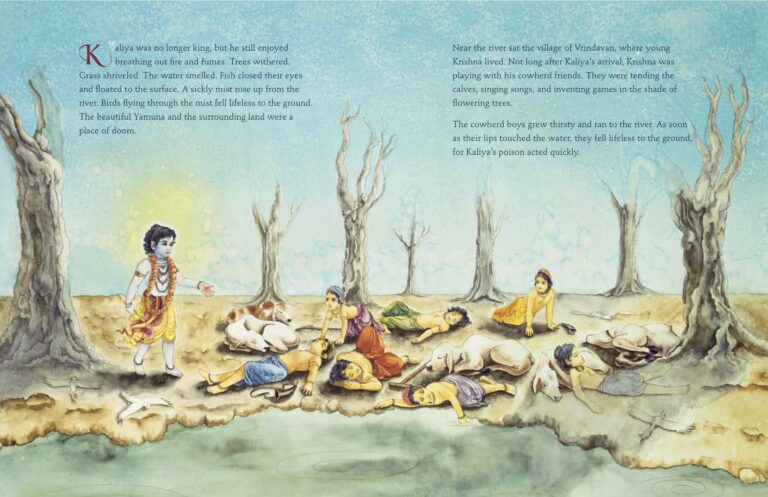
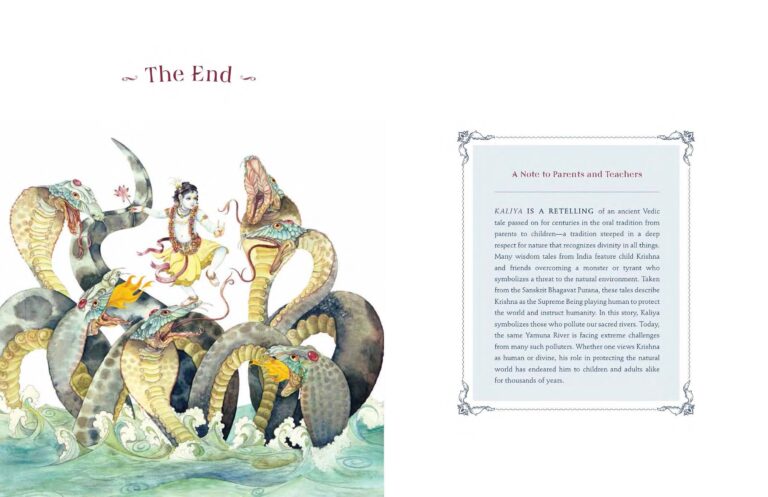
Kaliya, king of ancient India’s serpent people, crosses the gods and must leave. He takes his serpentine wives and offspring and relocates to the pristine Yamuna River, which flows by young Krishna’s village of Vrindavan. The serpent king’s venom poisons the river. Birds fall lifeless to the ground, trees and vegetation dry up, and the lives of the villagers are in danger. Although only a child, Krishna has sworn to protect the environment and safeguard the many animals and people who depend on the river for their existence. Whether one views Krishna as a divine being or as a mischievous child, his respect for nature is exemplary.

This tale from India’s ancient Sanskrit wisdom texts transcends its moment in remote history to deliver a message as relevant as today’s news. Artist Patrick Wire’s luminous illustrations recall the vibrant palette of Maxfield Parrish and complement author Joshua Greene’s lyrical retelling of this classic story.

Gallery

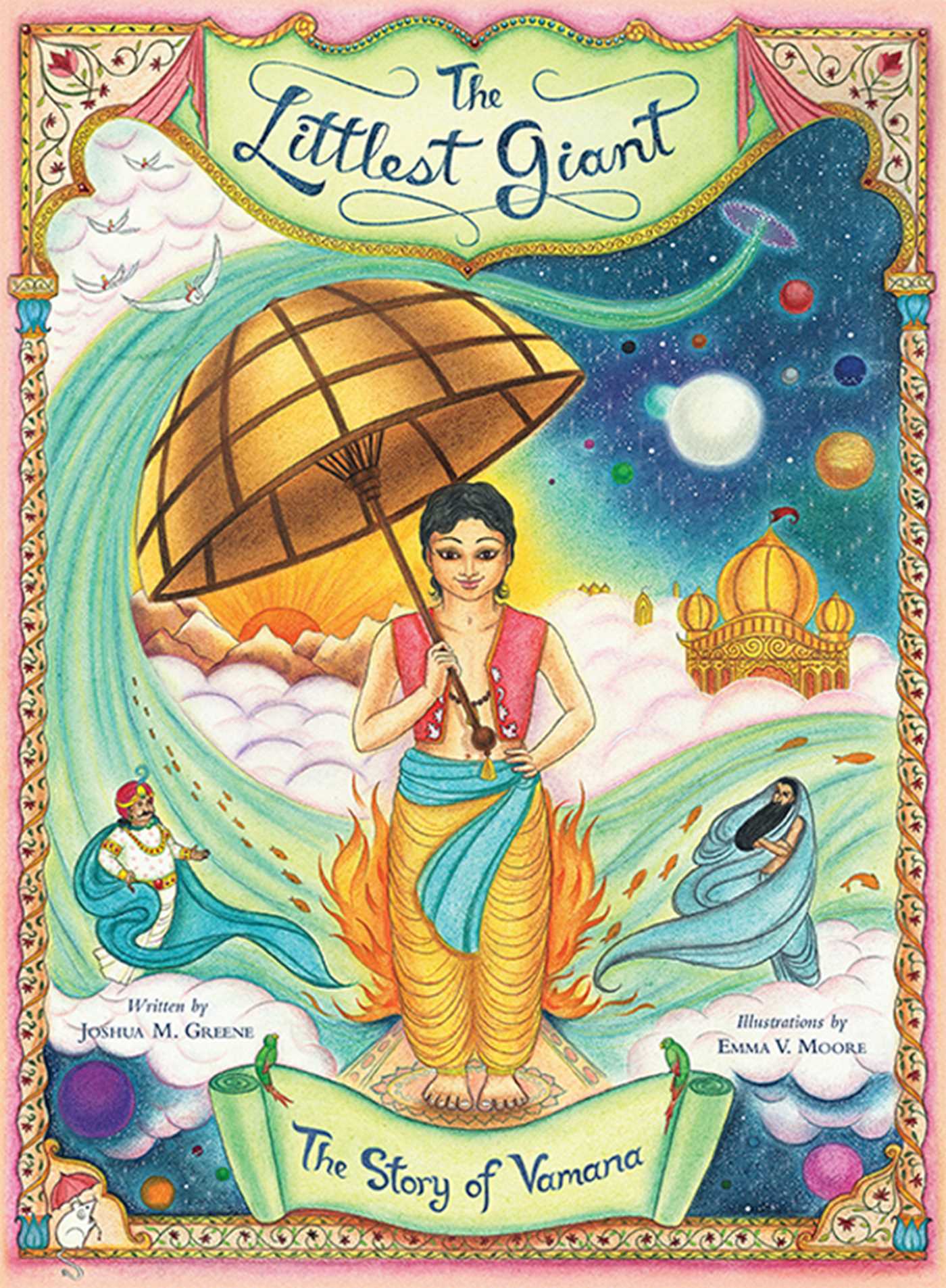
The Littlest Giant

The Littlest Giant

The story of Vamana

An illustrated modern adaptation of the beloved Indian classic “Ten Avatars.”

King Bali is not a bad soul; he’s just ambitious. He wants big things! As a consequence, he doesn’t have friends. What he does have is an evil adviser named Shukra, who is even more ambitious than the king. When King Bali is visited by a tiny sage, Shukra is suspicious and warns the king to stay away. In this retelling of an ancient story from the Sanskrit histories, King Bali learns that big things can come in small packages — and that sometimes a small courtesy can bring big rewards. Illustrator Emma Moore applies luminescent colors and dynamic perspectives to her visualization of this tale of big and little, adapted from India’s beloved “Ten Avatars.” Author Joshua M. Greene’s elegant and direct storytelling renders an otherwise esoteric subject accessible and relevant for contemporary young readers.

Gallery

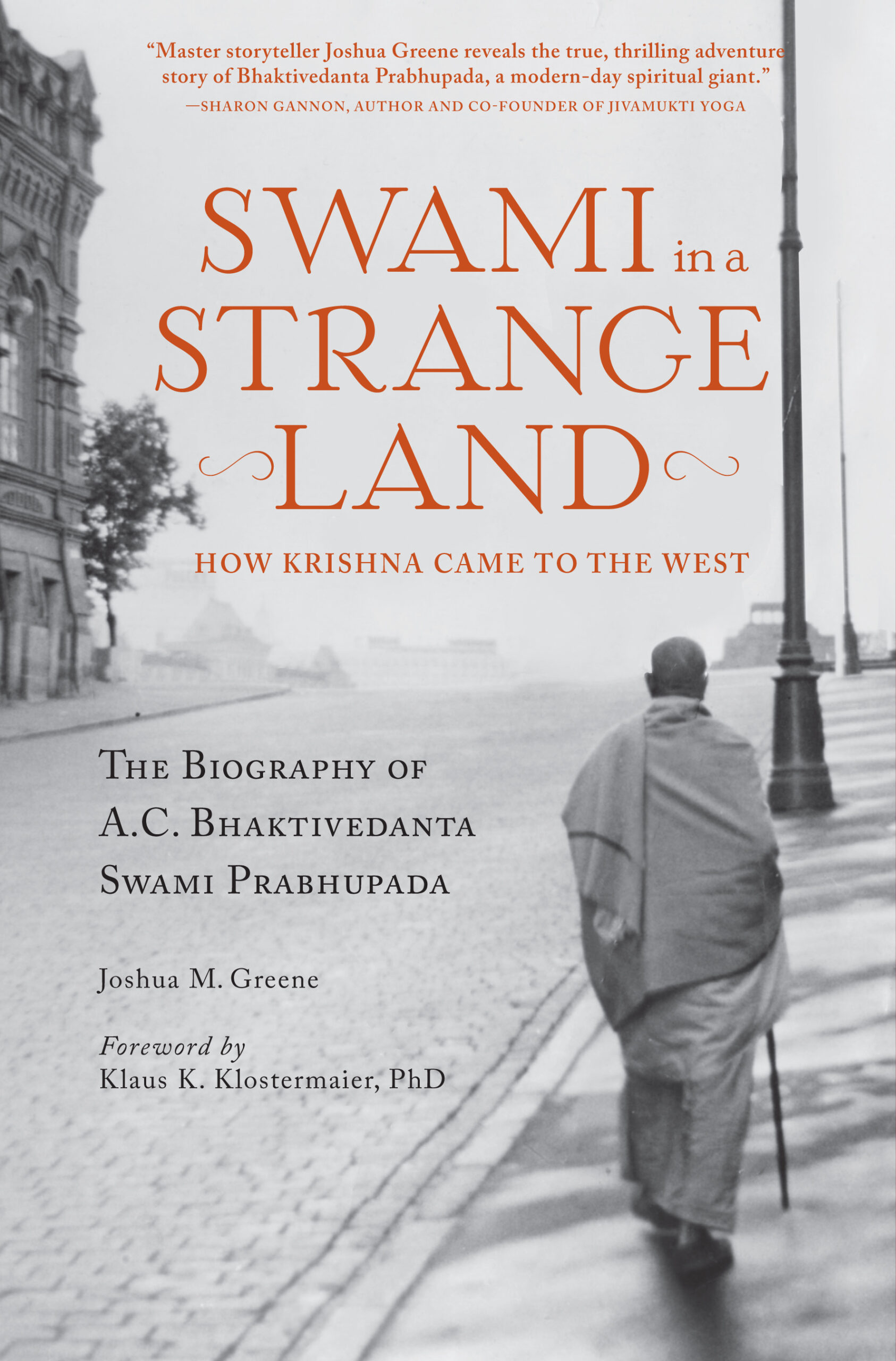
Swami in a Strange Land: The Biography of Swami Bhaktivedanta Prabhupada

Swami in a Strange Land

How Krishna Came to the West

Into the turbulent 1960s with its civil rights marches, anti-war demonstrations, and challenges to traditional American life stepped 70-year-old Bhaktivedanta Swami, on a mission to save the world. He arrived by cargo ship, having suffered two heart attacks on the storm-tossed ocean journey from India. He had seven dollars to his name, knew no one, and had never been outside his homeland. But he was determined to spread the teachings of Krishna, the Supreme Being of the ancient Vedic scriptures.

He passed away twelve years later. By then, “Prabhupada” (as he was called by admirers) had built an international movement with millions of followers, translated dozens of Sanskrit sacred texts, established hundreds of centers to Bhakti (devotional) yoga, and made Krishna a household name through popular recordings and street chanting parties. The path to self-realization has never been the same.

Swami in a Strange Land shows why cultural icons such as Beatle George Harrison and poet Allen Ginsberg embraced Prabhupada’s teachings, and why millions more have embarked upon the path of bhakti yoga in his footsteps.

Watch

the book trailer

Praise for swami in a strange land

Alfred B. Ford

Board Member, Ford Motor Company

"A beautifully written, enthralling, and scrupulously researched book about an extraordinary personality. A must-read for those who know nothing about the founder and preceptor of the Hare Krishna movement, and all those who think they already know."

"Joshua Greene wonderfully tells this story of timeless love."

Radhanath Swami

Author, The Journey Home
5

"The true, thrilling adventure of a modern-day spiritual giant."

Sharon Gannon

Co-Founder, Jivamukti Yoga
5

"A story one would not believe if it were not a fact."

Klaus K. Klostermaier

Professor Emeritus, University of Manitoba
4

Appreciations for Bhaktivedanta Swami

"One day I just realized, God, this man is amazing!"

George Harrison

Singer-songwriter, The Beatles
5

"Swami Bhaktivedanta brings to the West an authentic metaphysical consciousness."

Thomas Merton

Author, Catholic Theologian
5

"Swami Bhaktivedanta -- what kindness, humility and intelligence!"

Allen Ginsberg

Poet
4

Meet the Author

Book a presentation

The inspiring life of beloved spiritual teacher Bhaktivedanta Prabhupada, in words and image.

Chapter Excerpts

The Reckoning

Thirty-six days later, after traveling 12,000 miles, the Jaladuta arrived in Boston harbor. The Coast Guard saluted the crew as they disembarked. Sailors unloaded cargo, and the following day the ship departed for New York. At noon on Sunday, September 19, 1965, Swamiji stared out at skyscrapers lining the New York horizon like giant concrete teeth. He took out his pen and composed a poem in his native Bengali. “My dear Lord Krishna,” he wrote, “I guess you have some business here, otherwise why would you bring me to this terrible place? Now it is up to you to make me a success or failure, as you like. I am just like a puppet in your hands. So if you have brought me here to dance, then make me dance — make me dance, O Lord. Make me dance as you like.”

Read more

Krishna’s messenger arrives in New York, 1965

From his bag he chose a dhoti — a three-yard length of cotton cloth dyed saffron, the color of a Vaishnava monk — and put on white rubber shoes and dressed with care. He said goodbye to the captain and crew and thanked them for their hospitality. Then he arranged for the two hundred sets of his books to be stored in the Scindia warehouse. If somehow he were able to sell a few copies, he would use the money to cover expenses for however long he stayed in America. Then, with nothing but his tiny suitcase, bag of cereal and an umbrella tucked under his arm, and holding the railing as firmly as his recovering muscles would allow, he stepped off the Jaladuta and into the future.

THE AGARWALS HAD ARRANGED for a representative from Traveler’s Aid to meet the Swami on his arrival, and together with the agent he set out together for Port Authority Bus Terminal. The Swami had sold a set of his books for twenty dollars to the Jaladuta’s captain, enough to purchase a ticket for Butler, Pennsylvania, where the Agarwals lived with their infant son. Along with a letter of sponsorship, the Agarwals had extended an invitation to stay for a few weeks in their Pennsylvania home as a way of adjusting to life in America. On the bus, the Swami watched an endless stream of cars fill the highways exiting New York City. He traveled past skyscrapers and slums, past billboards and blackened industrial zones and miles of factories that lay between New York and Pennsylvania.

America’s four-hundred-year history revealed itself to him with every passing mile. Pioneers had made their way across the Atlantic seeking religious freedom in a land of their own. They crafted homes of wood cut and carved with their own hands, plowed the earth, offered prayers of thanks and built a nation like none other in human history. Generations came and went, and their descendents swapped their ancestors’ noble purpose for the chance to bore through mountains and urbanize vast tracts of land. They spent fabulous sums constructing coast-to-coast highways, soaring skyscrapers and dense cities that concentrated millions of people into vertical mazes of concrete and glass. Inspired by advances in technology, they evolved a new ethos. Americans were no longer caretakers of the earth but its masters, competing with one another for profits and goods. They turned their backs on covenants with the natural world, gouged the ground for oil, pillaged forests, built slaughterhouses, churned out weapons, conquered foreign lands and made of the world one huge market. Money was their God — the same one India now worshiped.

The Swami looked at the vista of this strange land whizzing past his window and knew there would be a reckoning. Once the Americans exhausted their fantasies about finding contentment in material things, they would emerge from their offices, clubs, shopping malls and restaurants and wonder what went wrong. When the veil of illusion fell away, when the reality of old age and disease and the sad brevity of a lifetime at last penetrated, the meagerness of their lives would become clear — and that would be the moment for Krishna consciousness, the lifeline that could save them from drowning in an ocean of repeated births and deaths. He had come for this purpose, to make the message available. Wake up, the Vedas declared. Don’t remain in darkness. Come up to the light!

The Physics of Consciousness

DR. RICHARD L. THOMPSON, PhD, grew up among people who had eliminated God from their lives: his parents went to church but didn’t believe what they heard there and their indifference to religion rubbed off on him. By the time he was in high school, Thompson was drawn to science. The more he heard science’s explanation of life, the more science, too, lost its allure. The notion that consciousness could be explained by patterns of oscillating molecular balls and springs made no sense to him. He looked forward to college. “That’s where I’ll find satisfying knowledge,” he thought.

Read more

In college, things got worse. The professors seemed even more convinced that all natural phenomena could be described by mathematical laws. The universe and life itself, according to them, were products of a cold, impersonal natural order. Tall, studious and gifted with a keen intellect, Thompson looked at problems from unusual angles. He was convinced modern science was wrong to define life in purely mechanistic terms and set out to find a better explanation of how reality operated. If traditional institutions of higher learning had no satisfying answers for life’s Grand Questions, there had to be other places he could turn.
In 1969, while earning his Master degree in mathematics at Cornell University, Thompson read books on Indian philosophy, including a copy of Bhaktivinode Thakur’s biography of Chaitanya Mahaprabhu. Each individual soul, the book described, was a spark of non-material energy, simultaneously one with and also different from Krishna, the Supreme Person. That struck a chord with Thompson. The idea that consciousness originated not from matter but from a higher order of energy appealed to him.

He next came upon a book with the intriguing title Easy Journey to Other Planets, first published in India in 1960, and was fascinated by its origins. The author, A.C. Bhaktivedanta Swami, had read in an October, 1959, issue of the Times of India that two physicists from the University of California had received the Nobel Prize for a startling discovery. Some particles, the physicists announced, were coupled with other particles spinning in reverse orbit. The physicists concluded there must exist an anti-material world parallel to our own world. They further theorized that, as pure energy, anti-material particles might prove to be an ideal fuel for interplanetary travel.

As a former pharmacist, Bhaktivedanta Swami understood the value of science on its own terms. After all, doctors did good work without having to invoke supernatural forces. Still, the Times of India article prompted the thought that contemporary scientific language might serve to convey to Western audiences the Vaishnava perspective on consciousness. Terms in the Times of India article suggested poetic equivalents: souls as “anti-material” particles, the spiritual universe as an eternal realm “spinning” opposite to the world around us, mystic yoga as a path to “interplanetary travel.” The Swami wrote a thirty-eight-page essay called “Easy Journey to Other Planets,” later published as the book Thompson had found.

“The latest desire man has developed,” Thompson read in Easy Journey, “is the desire to travel to other planets.” Such a desire was natural, since the soul originally belonged to an “anti-material world” where life is eternal, blissful and fully self-aware. The desire for interplanetary travel could be fulfilled by the process of Bhakti Yoga — the highest of all yogic processes.

The book went on to explain that, like antimatter, the “anti-material world” of the soul could only be understood by moving past realities felt and seen, to realities intuited. The secrets of creation would not be found with electron microscopes and orbiting optical telescopes, which were hampered by the limitations of human perceptions and thought, but by inner experiment.

Farther down, below the realm of short-lived subatomic particles, Easy Journey explained, on the most fundamental levels of creation lay an indestructible reality. This was the realm of consciousness, that part of life which was never annihilated. The Svetasvatara Upanisad gave an exact measurement: the dimension of the soul was “one ten-thousandth of the tip of a hair”. Too small to be perceived by material tools, this indestructible particle of non-material energy was so powerful that it illumined the entire body with consciousness. “The scientists’ conception of antimatter,” Easy Journey continued, “extends only to another variety of material energy, whereas the real antimatter must be entirely anti-material and free from annihilation by its very nature.”

Easy Journey quoted the Bhagavad Gita’s description of two forms of energy: one inferior (apara-prakriti) and the other superior (para-prakriti). The soul is formed of superior or anti-material energy and can never be destroyed. “Because of the presence of this anti-material particle, the material body is progressively changing from childhood to boyhood, from boyhood to youth to old age, after which the anti-material particle leaves the old, unworkable body and takes up another material body.”

Easy Journey then described that “as material atoms create the material world, so the anti-material atoms create the anti-material world with all its paraphernalia.” By using what astrophysics might later describe as black holes, master yogis “give up their material bodies at will at a certain opportune moment and can thus enter the anti-material worlds through a specific thoroughfare which connects the material and anti-material worlds.”

From the Vedic perspective, the book concluded, interplanetary travel depended not on technology but on mental preparation. “Scientists who explore outer space in an attempt to reach other planets by mechanical means must realize that organisms adapted to the atmosphere of the earth cannot exist in the atmospheres of other planets. One can attempt to [inhabit] any planet he desires, but this is only possible by psychological changes.”

Easy Journey cited the Bhagavad Gita’s prescription for travel between worlds: “That upon which a person meditates at the time of death, quitting his body absorbed in the thought thereof, that particular thing he attains after death.” Such transfer to other worlds takes place instantly, at the speed of mind, and for a master yogi it is “as easy as an ordinary man’s walking to the grocery store. By the grace of God, we have complete freedom. Because the Lord is kind to us, we can live anywhere — either in the spiritual sky or in the material sky, upon whichever planet we desire. However, misuse of this freedom causes one to fall down into the material world and suffer the threefold miseries of conditioned life. Easy Journey concluded that “Bhakti Yoga is the eternal religion of man. At a time when material science predominates all subjects — including the tenets of religion — it would be enlivening to see the principles of the eternal religion of man from the viewpoint of the modern scientist.”

IT WAS CLEAR TO PROFESSOR THOMPSON that the book was a semantic exercise but it was one that had required a bold, intuitive leap on the author’s part. Bhaktivedanta Swami, it seemed to him, had discovered a way to make use of scientific terminology to show the relevance of Vedic teachings. The book even alluded to the multiverse, a theory of infinite universes which had only recently made its appearance in scientific circles in 1960 when Easy Journey was first published.

On an emotional level, Thompson found Easy Journey exciting. Intellectually, however, he was torn. Was the Swami just trying to validate religious myths with science? “How could this stuff possibly be true?” Thompson wondered. “Life on other planets? Mystic space travel? This is so different from what I’ve been trained to believe all my life.”

Thompson was of that generation of twentieth-century scientists who had begun asking new questions since, for all practical purposes, science had reached the limits of its ability to see past the very small or penetrate beyond the very distant. What lay on the other side of those limits? Something more than the reductionist picture of the universe was going on; but for fear of being marginalized or losing their jobs, at that time none dared call it divinity. Twenty-two-year-old Richard Thompson walked the streets of Ithaca, New York, displaced from the world he knew yet uncertain about the world he had discovered.

“Just thinking science wrong and the Vedic view right — that’s not sufficient,” he concluded. “There has to be a way to reconcile the two. That would be important. If I’m feeling this way, there must be others who are torn by the contradiction between modern science and Vedic knowledge. If I can put those two things together, maybe I can help them, as well as myself.” Eventually, he approached the book’s author, A.C. Bhaktivedata Swami Prabhupada, for initiation and received the name Sadaputa Das. Over the next thirty years, Sadaputa dedicated himself to defining the relationship between science and religion.

“Some see it as one of inevitable conflict,” he wrote in the introduction to a collection of his essays, “others see it as harmonious, and still others see differences that they hope to reconcile. For many years, I was one of the latter. However, I have come to realize another potential relationship between religion and science. Both can cross-fertilize one another with inspiring new ideas that may ultimately culminate in a synthesis that goes beyond our understanding of either.”

In his career as a devotee scientist, Sadaputa emulated his teacher, Prabhupada, in pointing out the shortcomings of attempting to explain consciousness and complex biological forms in purely mechanistic terms. He would go on to write several acclaimed books that reconciled prevailing scientific perspectives with the Vaishnava viewpoint.

“I liked the third chapter of Mechanistic and Nonmechanistic Science very much,” wrote Eugene Wigner, a theoretical physicist who had won the Nobel Prize in 1963 for his contributions to the study of elementary particles. “In particular, it acquainted me with the Bhagavad Gita. I learned that the basic philosophical ideas on existence are virtually identical with those which quantum mechanics led me to.” Another Nobel laureate, Brian Josephson, best known for his pioneering work on superconductivity and quantum tunneling, admired Thompson’s “cogent arguments against the usual scientific picture of life and evolution.” Like his guru, Prabhupada, Sadaputa managed to shine a light on scientific anomalies while maintaining utmost respect for good science. “Because he loves science,” wrote a reviewer, “he is pained by its contradictions and seeks its intelligibility in a larger context.”

BY 1973, Prabhupada had initiated several scientist disciples and founded the Bhaktivedanta Institute, whose mission was to establish the Vedic viewpoint as scientifically defensible. “Our worship of Krishna,” he told them during a morning walk in Los Angeles, “is our internal affair. The external affair is to establish that life comes from life. Otherwise, atheistic scientists will misguide society. Because it is truth, you will come out triumphant, no doubt, but your work is to determine how to present it in a modern way.” Encouraging — and initiating — scientists became a seminal component of Prabhupada’s campaign to establish the Vedic viewpoint in the West.

In the Media

Articles & Interviews

Patheos - Spirituality Itself Series

SWAMI IN A STRANGE LAND: HOW KRISHNA CONSCIOUSNESS CAME TO THE WEST By Bridgitte Jackson-Buckley

Questions & Answers

with the author

All wisdom traditions teach one basic idea: reality is deeper than what we perceive. The unique contribution of Bhakti or devotional yoga is a tried-and-true, practical method for seeing that deeper reality, through chanting of sacred mantras, a healthy lifestyle, and the cultivating of a yogic way of life. What is the relevance of that message? Imagine living in full awareness of yourself as an immortal, invincible being. You are no longer the sum-total of your life’s traumas. They no longer define you. That awareness of ourselves as spirit-souls is energizing, exciting, liberating. It means going from doubts and uncertainty to self-confidence and action.

Prabhupada started chanting Hare Krishna in public in 1965 when he arrived from India at age 70. The consciousness-expanding influence of that chanting inspired many renowned artists to include it in their compositions. John Coltrane dedicated his final three albums to chanting and yoga. John Lennon included the mantra in “Give Peace a Chance.” Stevie Wonder has the chant on his album “Songs in the Key of Life.” The list is quite long. George Harrison popularized the Hare Krishna mantra around the world in his post-Beatles music. Most recently, an entire category of music—“Kirtan”—has emerged, and the more informed chanters acknowledge their debt to Prabhupada for having set the stage a half-century ago with the Krishna chanting.

Science and spirituality share a common goal: to reveal the mysteries of creation. Most sciences qualify their research by eliminating transcendent causes—in other words, no reference to souls or gods or anything that cannot be proven through research and experiment. Prabhupada saw that as a mistake. Sometimes he even called it dishonest and dangerous. He also understood why science is so intolerant of spirituality: it triggers emotional antipathy toward exploitative religion and blind faith. Real spiritual inquiry is not religion. That was his point. Real spiritual inquiry is science with the limitations removed.

In the mid-1960s, when Prabhupada first arrived in New York, there were very few yoga studios, vegetarianism was considered weird, and mantra chanting and meditation were viewed as practices for people on the margins of society. Now, these things are standard in progressive health and wellness regimens. Back then, Krishna devotees were viewed as lost souls. Today, they are professors teaching Hinduism in universities, credentialed representatives in areas of conflict resolution, environmental reform, and spokespeople for enlightened business. The influence of Krishna consciousness on American life is quite profound. From a single storefront in New York’s Lower East Side, the movement has expanded to more than 100 temples, a dozen farm communities, vegetarian restaurants, and community service organizations nationwide

People always ask me how I can reconcile my spiritual beliefs with what happened in Europe less than 80 years ago, I didn’t have a very good answer. It’s a real challenge justifying the purposeful vision of creation outlined in the Sanskrit texts with the reality of how people treat one another. Prabhupada was born in 1896. He lived through two world wars. I wanted to write a book that would convey how he was able to resolve that contradiction—so not just a book about the chronology of his life but about his teachings. It is, I believe, the same compulsion we feel to reconciling the smooth, predictable universe of Einstein with the chaotic, unpredictable world of quantum physics. There is a strong correlation between those two quests.

Books alone cannot change people. Black ink on a page is just that. But ideas, captured in a book and then explored in good company—what the Bhakti tradition calls sangha—that’s a powerful combination. From the outset, I had four goals for Swami in a Strange Land. I wanted readers to understand that
1) We are not our body but the consciousness that animates the body
2) The source of creation is also conscious
3) Prabhupada demonstrated what a real guru or teacher is
4) I’d like to find a sangha group to explore these ideas further.

I hope not. The sacrifices Prabhupada went through to do what he did—the years of struggle, of derision, of rejection by family and acquaintances, the dire conditions he endured, basically every reason to give up his journey—I wouldn’t want anyone to think they have to go through that to achieve enlightenment. But clearly sacrifice is needed. You can’t go to yoga class, then go out smoking and drinking, and think you’re going to get anywhere. In the words of Joe Campbell, we have to give up the life we want so as to embrace the one we are meant to lead. It starts with daily chanting of Hare Krishna, a simple prayer. Everything flows from that.

Very important. There is no question, for example, that George Harrison’s allegiance to Prabhupada as a teacher and George’s recordings of the Krishna mantra popularized mantra chanting in a powerful way. But was Prabhupada’s mission dependent on that kind of celebrity affiliation? Not at all. How many celebrities have come and gone over time? Yet the chanting is still there—not still there, growing constantly! We can say that thoughtful people—famous or not—see the power of Prabhupada’s teachings. He always said he had not invented anything. He was passing along wisdom that has been embedded in ancient texts from before recorded history. That humility was a big part of his appeal.

Social

Instagram & Facebook Images

Link information: Instagram: gitawisdom, Facebook: joshuayogesvara, Web: swamibio.com

Learn more

Hare Krishna The Film

Hare Krishna! is the true story of an unexpected, prolific, and controversial revolutionary. Using never-before-seen archival verite, Prabhupada’s own recorded words, and interviews with his early followers, the film takes the audience behind-the-scenes of a cultural movement born in the artistic and intellectual scene of New York’s Bowery, the hippie mecca of Haight Ashbury, and the Beatle mania of London, to meet the Swami who started it all.

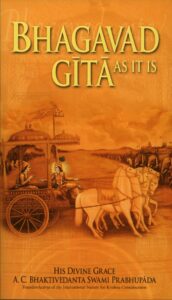
BHAGAVAD GITA AS IT IS book

The Bhagavad Gita is the main source-book on yoga and a concise summary of India’s Vedic wisdom. Yet remarkably, the setting for this best-known classic of spiritual literature is an ancient Indian battlefield.

At the last moment before entering battle, the great warrior Arjuna begins to wonder about the real meaning of his life. Why should he fight against his friends and relatives? Why does he exist? Where is he going after death? In the Bhagavad-gita, Lord Krsna, Arjuna’s friend and spiritual master, brings His disciple from perplexity to spiritual enlightenment. In the course of doing so, Krsna concisely but definitively explains transcendental knowledge; karma-yoga, jnana-yoga, dhyana-yoga, and bhakti-yoga; knowledge of the Absolute; devotional service; the three modes of material nature; the divine and demoniac natures; and much more.